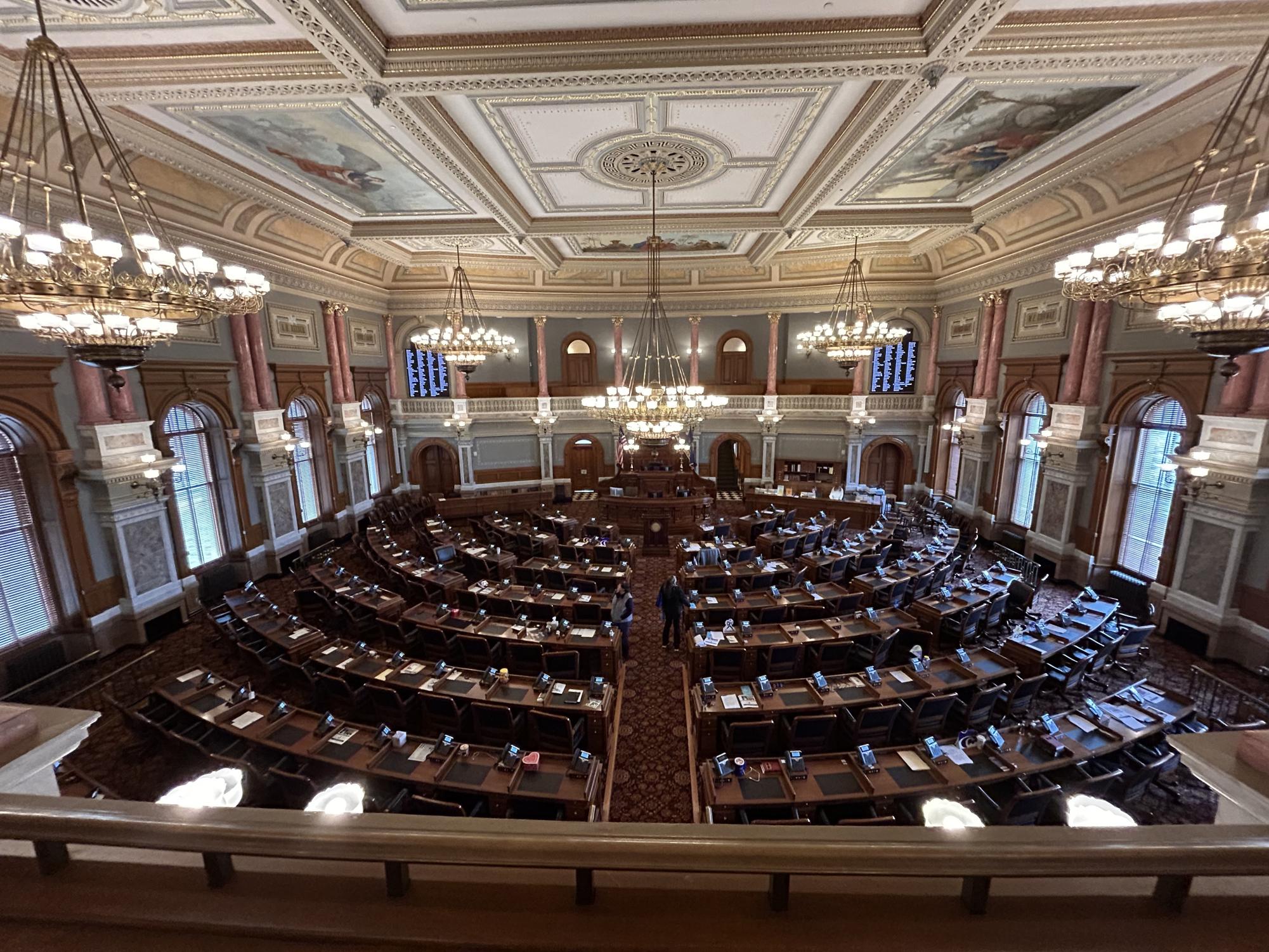

In late October 2025, the Kansas State Senate attempted to call a special session to politically gerrymander their congressional districts; yet, the Kansas House of Representatives failed to obtain the two-thirds vote threshold for a special session, thus it could not proceed. Gerrymandering for Kansas is dead in the water, for now.
According to Ballotopedia, gerrymandering is the practice of drawing electoral district lines to favor one political party, individual, or constituency over another.
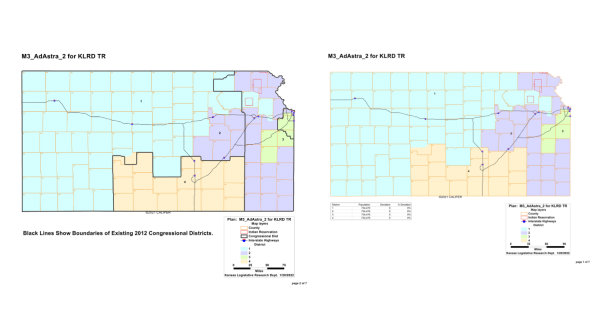
The question presented by the issue is whether gerrymandering is right for Kansas at this time. There are a variety of opinions on this question.
According to the U.S. Constitution, political gerrymandering is permitted (Shaw v. Reno 1993), but state representative for Kansas House District 20, Mari-Lynn Poskin, claimed, “I would unequivocally say the gerrymandering is wrong, no matter who does it, Republicans or Democrats…I am very opposed to the mid-decade redistricting push going on now.”
Lawyer and partner of Graves Garrett Greim in Kansas City, Mo., Edward Greim, who specializes in complex commercial litigation, free speech, and election law, said, “I think it is ok to do.”
Greim stated, “With respect to political or partisan gerrymandering, there is no actual prohibition on that in the Constitution. So, although partisan or political gerrymandering is often criticized, it doesn’t actually violate anything… at the federal level.”
Poskin agrees with the fact that “political gerrymandering is not unconstitutional in the state of Kansas.” However, she then continued and said, “Still, the guidelines behind districting is that you’re supposed to keep geography and groups of interest intact when you gerrymander and not split up people that have the same interests.”
To successfully remove Kansas’s only democratic representative (Sharice Davids, KS-3), “they (congress) would have to break Johnson County up into two and possibly three different districts…It’s a little bit ridiculous,” Poskin said, which makes it seem like gerrymandering Johnson County is overly dangerous for Kansas and its representation. However, Greim challenges this statement when he said, “In Massachusetts, I think Republicans are somewhere around 40% and…they have zero of nine seats…It’s pretty bad everywhere.”
There are many aspects to gerrymandering, making it a confusing process. Specifically in Kansas, Greim mentioned, “there’s no reliable way to answer whether we have a ‘partisan gerrymander,’ or, if we do have it, what the line should be between ones that are good and ones that are bad (gerrymandered lines)… in other words, calling balls and strikes is just not really possible, and that may just be all the eye of the beholder.”
The challenge for both voters and lawmakers is deciphering what is “right” and what is “wrong” gerrymandering, but Poskin said it’s all wrong: “In my bones and just on the surface, it (gerrymandering) sure seems like a bad idea.”
Greim said, on the federal scale, “If you go by proportionality, way, way more Republican seats have been lost than we’re talking about in Kansas.”
Poskin’s focus is on gerrymandering practices in Kansas, and she stated her disagreement specifically towards Kansas gerrymandering when she said, “In terms of Kansas joining the fray, the most logic that I’ve seen behind it is, ‘well, they’re doing it, so we have to do it.’”
Greim explained a similar opinion from an interaction he had with an audience member in his community debate about gerrymandering in Kansas and Missouri. The audience member approached him and expressed the unfairness of his mentioning California’s gerrymandering when he failed to say California only gerrymandered in response to Texas, and that type of gerrymandering “is not the same.” She said it’s wrong for Texas, but not for California.
To this opinion, Greim responded, “I reject that theory. I think it’s either wrong or it’s right, and it’s not like it’s okay for your side, but not for the other.”
“I think political gerrymandering is a bad idea in general, because of the outcome of diluting voices and communities of interest is sort of one of the guidelines that we use,” Poskin said.
As a lawyer, Greim’s stance aligns with the law: “There is no actual prohibition on that (gerrymandering) in the Constitution. So, although partisan or political gerrymandering is often criticized, it doesn’t actually violate anything… at the federal level.”
As a Kansas and Johnson County Democratic Representative, Poskin stated, “Every Johnson County legislator should be concerned about keeping our county whole and not splitting it up because we need one congressperson to be fighting for Johnson County-specific needs in the U.S. Congress.”
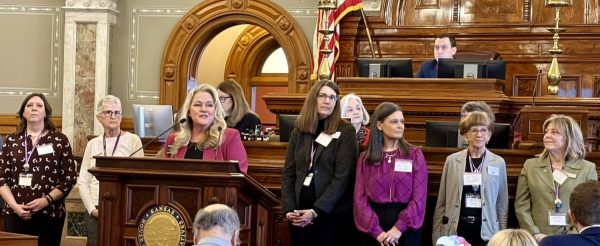
Senate President Masterson said for the Kansas Senate Democrats, “It will be a national drawing outfit that’s working on it from a federal perspective.” To which Poskin responded, “I can’t think of a quote that tells you that this entire initiative is less focused on what is good for Kansas than the Senate President who’s vying for Donald Trump’s endorsement in the 2026 gubernatorial race.” In fact, Kansas Senate President Ty Masterson told the Kansas Reflector, “I am actively engaged in the battle for the heart and soul of America, helping the president to Make America Great Again.”
Many values come into play when creating opinions on gerrymandering. From a Jewish perspective, the question appears: What kind of involvement should the Jewish community and individuals have in the political process?
“Our participation in democratic governance in the United States from a historical perspective of Jewish history is relatively modern and relatively unprecedented,” local synagogue Beth Shalom Head Rabbi, Rabbi David Glickman, said.
He continued, “I think that the Jewish approach is to look towards districting in a way that makes sure that the maximum number of citizens are fairly represented statistically in their beliefs…we should be advocates for a move towards patriotism over partisanship.”
Both Ty Masterson’s and Sharice Davids’s offices were contacted for comment, and neither offered a response.
For now, gerrymandering is on pause in Kansas until Jan. 12th, 2026, when the legislature reconsiders this question.