
According to Johns Hopkins University, the American government helps 41.7 million citizens a month afford groceries. What happens to all of those Americans when the government is not functioning? From Oct. 1 to Nov. 12, 2025, America found out what the lack of SNAP benefits did to its beneficiaries’ lives.
How did the federal government get into this situation in the first place? Every year, U.S. Congress must pass bills on time to approve funding for the U.S government. In the case that Congress does not succeed in passing these bills, short-term “bills” are often passed, called a continuing resolution (CR), so that the economy keeps moving as Congress works through the budget bills.
This year, Republicans and Democrats disagreed over the renewal of healthcare subsidies, therefore, the budget bills couldn’t pass. As of September 30, 2025, the U.S. Government’s funding expired, resulting in a halt of governmental agencies, Supplemental Nutrition Assistance Program (SNAP) being one of them.
The SNAP program was created in 1964 by President Lyndon B. Johnson as part of his of domestic improvement programs known as the Great Society. It provides supplemental food benefits to Americans who qualify to receive them.
Kristin Mmari, Dr. PH, MA, Professor in Population, Family, and Reproductive Health, commented on the lack of the SNAP program, “‘Without SNAP’, she says, we’d face ‘a potential public health crisis of food insecurity and hunger,’” (Johns Hopkins).
Locally, JFS (Jewish Family Services) decided to make a difference for families in the Kansas City Metro Area who were affected by the government shutdown.
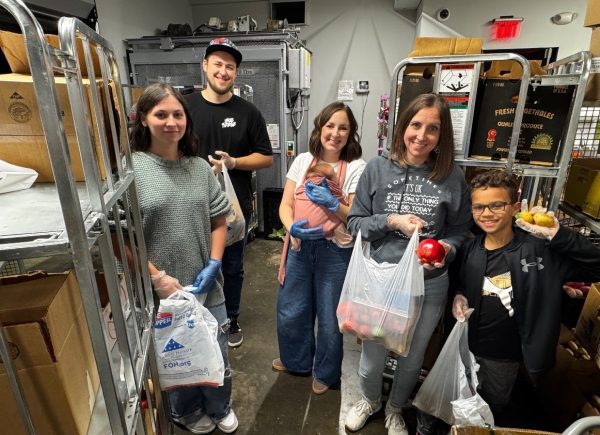
Zach Sellers, Director of the Pantry at JFS, recognized what different JFS branches around the country were doing, specifically JFS in San Diego, which had put together a food drive for those affected by the government shutdown. Sellers knew JFS could also make this happen in the Kansas City Metro Area while the government food benefits came to a halt.
Seller said that with his previous large food distribution experiences, he knew JFS could execute such an event. Sellers mapped out how the food drive would look at JFS’s Brookside location, and “it was first-come, first-served, but they didn’t need to RSVP or reserve a spot ahead of time,” Sellers said.
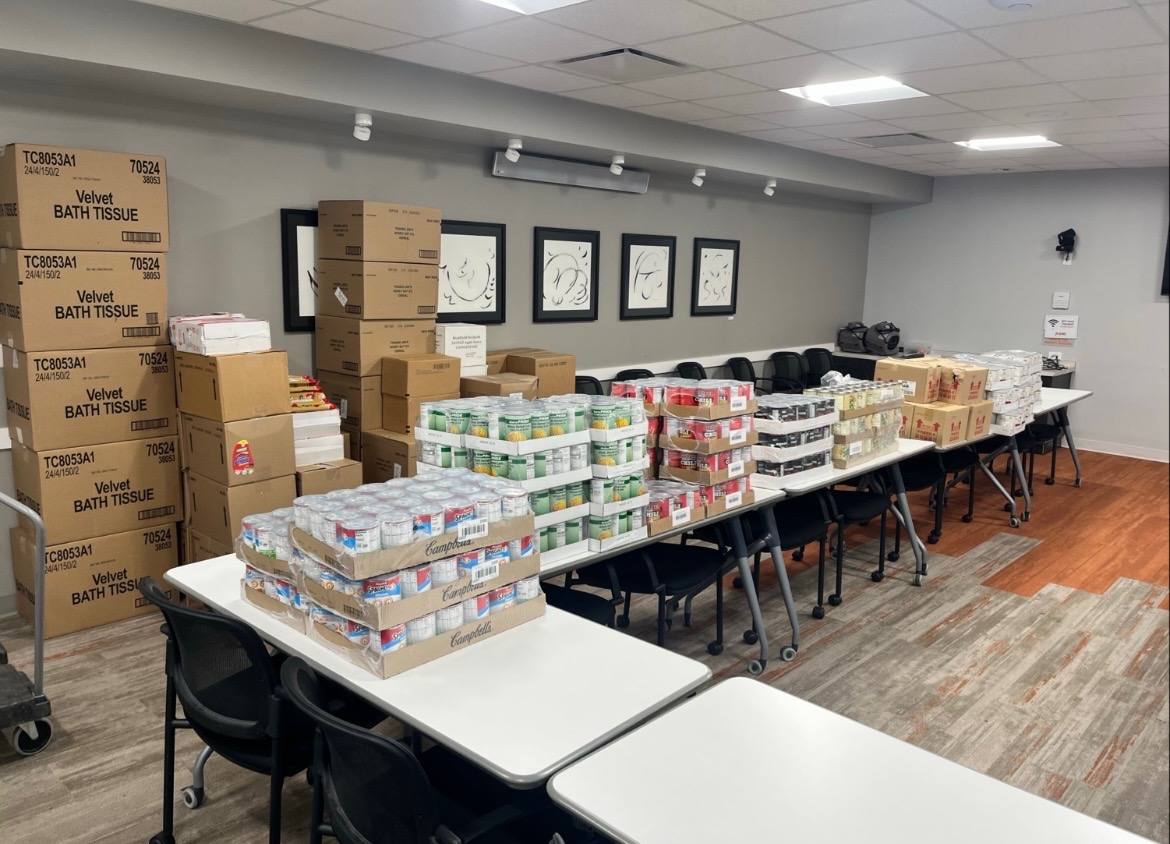
They asked the community for monetary donations, and with that money, JFS purchased food from several vendors. Along with that, Harvesters donated canned goods and non-perishable food and bought bread from Avenue of Life. With the help of these distributors, JFS succeeded in putting on a successful food drive, where they gave out food kits to the affected families.
Kanbe’s Market, one of JFS’s partners, donated over 700 pounds of produce. JFS also added ground beef, toilet paper, and laundry detergent to the food kits.

Using the honor code, JFS served everyone who showed. “We ended up distributing 300 pounds of food to 305 individuals, that was 84 families, and 169 of those (individuals) were children,” Sellers said. This included people affected by the government shutdown in any way, furloughed government employees, and anyone who had not received their SNAP benefits.
“We just operated in good faith,” Sellers said, and even if certain individuals were not directly affected by the shutdown, they helped out friends or family members in need. For these reasons, JFS did not need to ask for proof of who regularly qualifies for SNAP benefits.
Editor and Business Manager of the Kansas City Jewish Chronicle, Sam Kricsfeld, said, “I think Jewish Family Services is continuing to achieve its goal of supporting the Jewish community and the wider community in its times of need.”