Days before the school year started, HBHA Upper School students were caught off guard by a brand new policy. Starting this year, all high school students have to turn in their phones at the beginning of the day, and they don’t get them back until dismissal.
This policy is not new for HBHA. In the 2024-2025 school year, all middle school students had to turn in their phones. However, this policy has shifted to the high school, and as of now, it looks like the rule will continue for years to come.
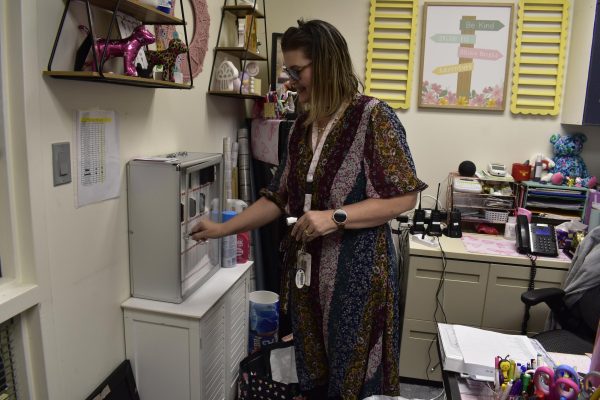
Every day, all middle and upper school students at HBHA are obligated to turn their phone into the middle and upper school executive assistant, Becky Wade.
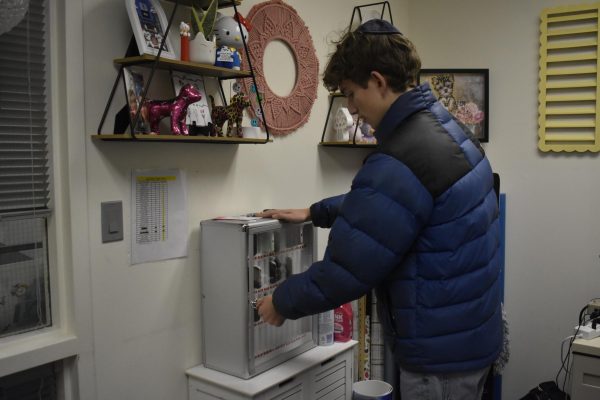
Wade said, “It has been a challenge to enforce everybody to turn their phones in here.” However, she does feel it has gotten easier as the year has gone on to enforce the policy.
Wade explained that if a student doesn’t turn in their phone, the first instance results in a warning, then they get written up, and then the third time, they have to wait for their parents to come and pick up their phone.
Wade said, “Here, there is no way to ensure that people turn their phones in. It is not like we can frisk you. So if you are caught having your phone, you get in trouble for lying and for not turning in your phone.”
HBHA is not alone in applying a phone polcy; starting in 2025, there has been a massive national resurgence in strict phone-free policies, with 22 states enacting laws to limit device use in school, according to Ballotpedia.
In our local Kansas City metro area, many schools have begun to implement phone bans in school. In 2025, the North Kansas City Public School District and the Kansas City Public School District both implemented a new phone policy.
Many studies show positive effects of banning phones in school, including better academic results, fewer behavioral problems, improved focus, and strengthened social interactions.
The leading objection to the phone ban is the loss of direct contact between students and their parents in an emergency situation. Parents and students alike have voiced concerns for this particular reason.
Phineas Green, a sophomore at HBHA, described his experience turning in his phone. Green said that people seem to be more social with each other, especially in passing periods, because they are not looking down at their phones. However, he also explained that a major drawback of the phone policy is that students who rebel and decide to keep their phones end up being on them more than usual, just in secret. He explained that this issue is a distraction to teachers and students alike.
Green commented on his concerns about safety, “Honestly, I don’t feel like I have the utmost security and safety, because I want to be able to contact my parents in case something happens.”
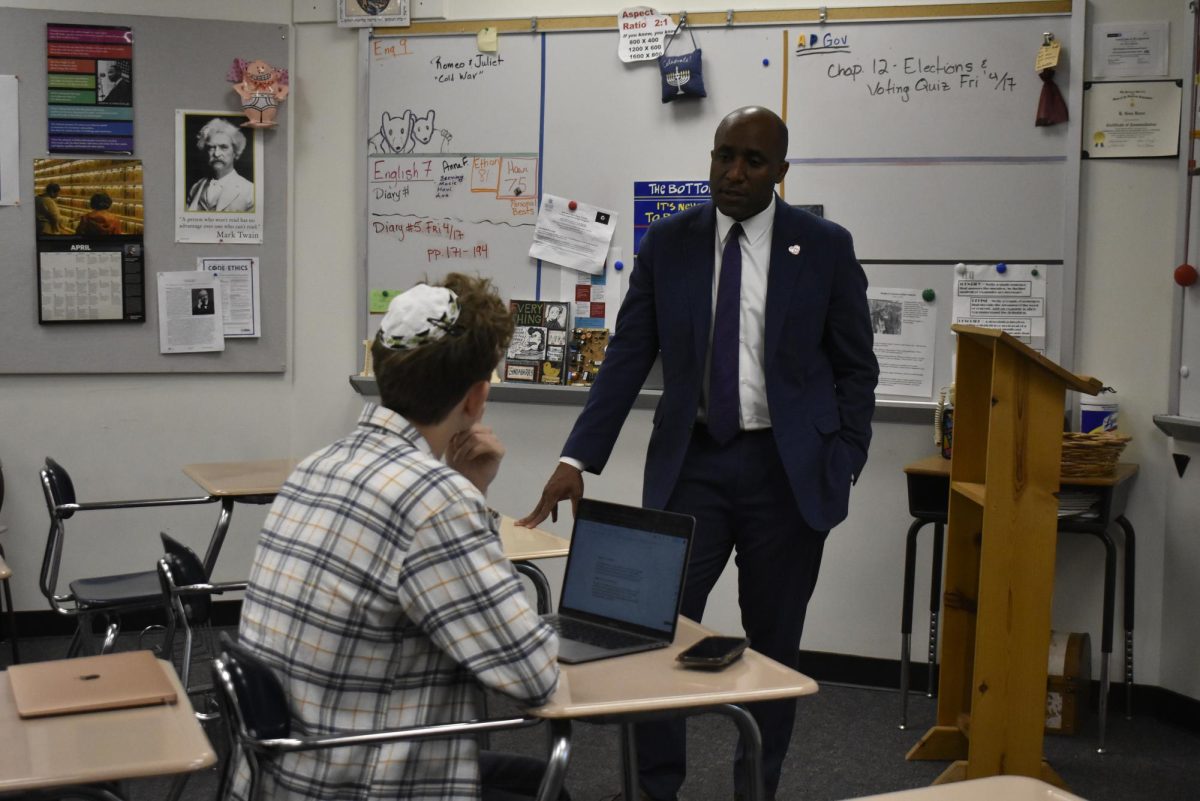
Zohar Flacks, Principal of Upper School and Jewish Education, explained the reasoning behind implementing a phone policy for the Upper School this year. She described that the policy change for middle school last year was successful, and the administration liked the environment that resulted when removing cell phones.
Flacks also explained that research suggests that screen time should be limited to allow better brain development, keeping successful cognitive capabilities, improving social skills, boosting academic achievement, and limiting cyberbullying.
Flacks said, “It is our responsibility to create the best environment for learning at HBHA, and the phone policy follows from that.”
When asked about safety concerns due to students not having their phones, Flacks described that the safety of the students is on teachers and administrators of HBHA, rather than the students. She said, “All of our security protocols involve teachers being responsible for communication during an emergency.”
As phone bans in school continue to expand nationwide, HBHA’s policy is reflective of how schools are changing in the way they approach technology. Schools across the country are starting to rethink how phones affect learning and daily life. HBHA’s new phone ban marks a shift in school culture and leaves students and staff adjusting to a new kind of daily routine.