











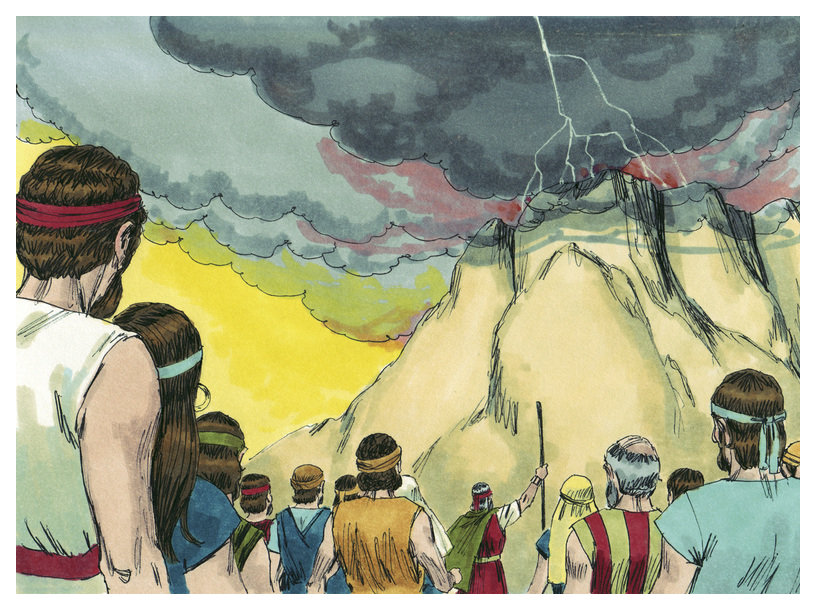





















After B’nei Yisrael received the Torah at Har Sinai in last week’s Torah portion, Moshe’s father-in-law (Yitro) heard of the miracles Hashem performed for the Jewish people because of Moshe. Yitro, alongside Moshe’s wife Tzipporah and their sons, treks to the desert to meet with Moshe.
Yitro observed Moshe constantly giving judgments on people’s disputes, and advised him to create a judicial system to relieve him of this role. This judicial system would require levels of qualified judges, which later developed into the Beit Din.
However, when Yitro asked Moshe why he hadn’t established a source of help yet, and Moshe replied with:
“כי יהיה להם דבר בא אלי ושפטתי בין איש ובין רעהו והודעתי את חקי האלקים ואת תורתיו”
“When they have a matter, it comes to me, and I judge between man and his friend, and I make them know the statutes of G‑d and His laws.” (18:16)
Why did Moshe not just reply with “I judge between man and his neighbor?” What is the importance of emphasizing he, “make[s] them know the statutes of G‑d and His laws”?
We can answer these questions with a story. ~250 years ago, in Frankfurt, a member of the Jewish community opened his business on Shabbat. Rabbi Avraham Abish was appalled and upset and asked the business owner to come to the Rabbi’s office. When the man didn’t show, the Rabbi called the President of their community and instructed him to purchase a large amount of goods from the business owner, but refuse to pay when payment became due; this would drive the man to come to the Din-Torah (judgment based on Halachah/Torah).
When the man finally came to the office, the Rabbi said, “It was my idea that he not pay you because I wanted to discuss with you the holiness of Shabbat.” The business owner responded with, “This is trickery; I am surprised that a Rabbi uses such tactics.”
The Rabbi opened a Chumash and read the pasuk above. He explained, “From here we can learn that when people come to a Rabbi for their personal matters, the Rabbi should use the opportunity to ‘make them know the statutes of G‑d and his laws’; discuss with them how to further their Torah study and observance of mitzvot. In order for me to enlighten you about Shabbat observance, I was compelled to create a situation which would bring you before me for a Din-Torah.”
A lesson we can take from this story is to appreciate the given laws and rules by G-d to help guide our lives. No matter what situation we are thrown into, the Torah is an eternal source and all of its contents aren’t time-bound. Since the Torah is able to apply to life in ancient and modern times, we should take advantage of this and integrate its laws and ideas into our daily lives.